

I know what you’re thinking.
The knowledge hypergraph is all about edges between nodes.
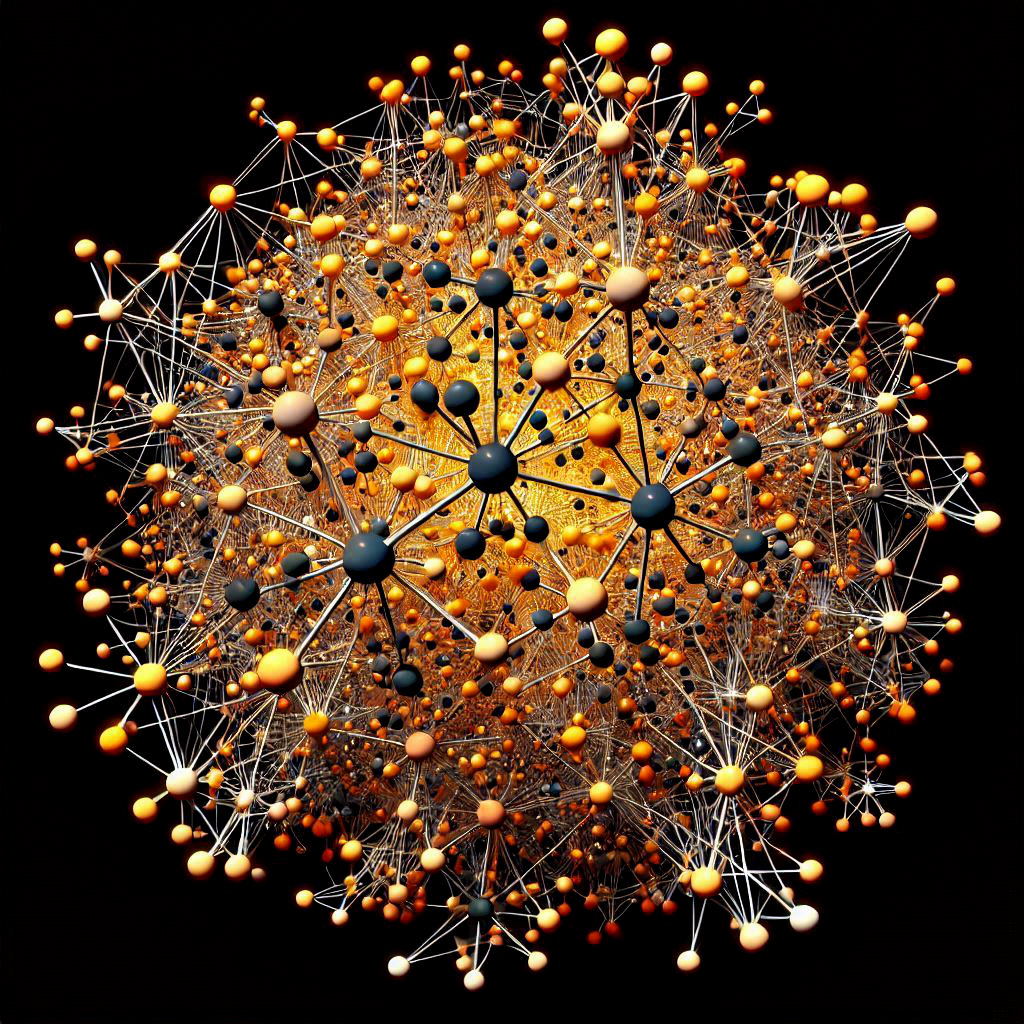
It’s about relationships between entities.
So you might be thinking...
Enough of the icky relationship ick!
Show me the cold, hard numbers!
Well, Open Web Mind has those, too.
And if you’ve been impressed by what you can do with the relationships in the knowledge hypergraph...
...you’re going to be blown away by what you can do when you throw in those cold, hard numbers.
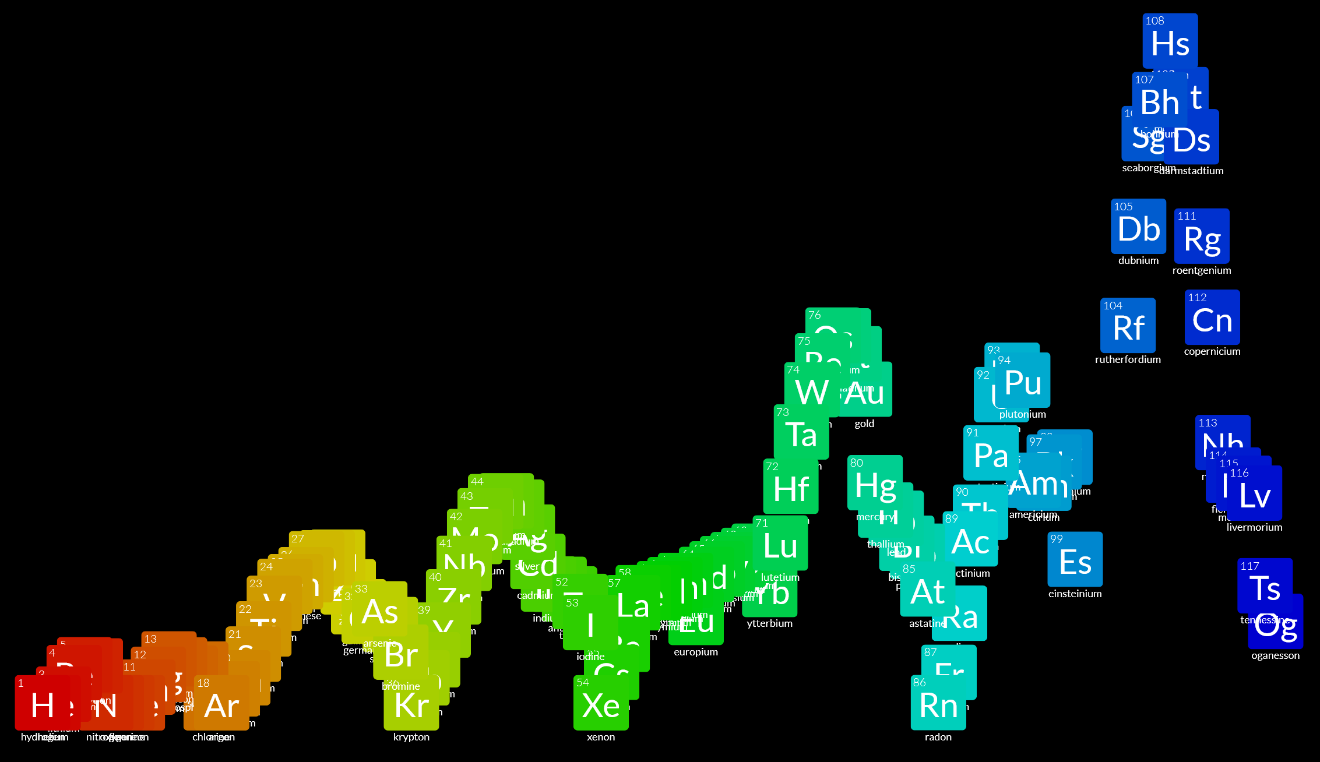
The value of values
Open Web Mind captures the cold, hard numbers in values.
Any node can have any value.
Here are a few values for the node representing oxygen...
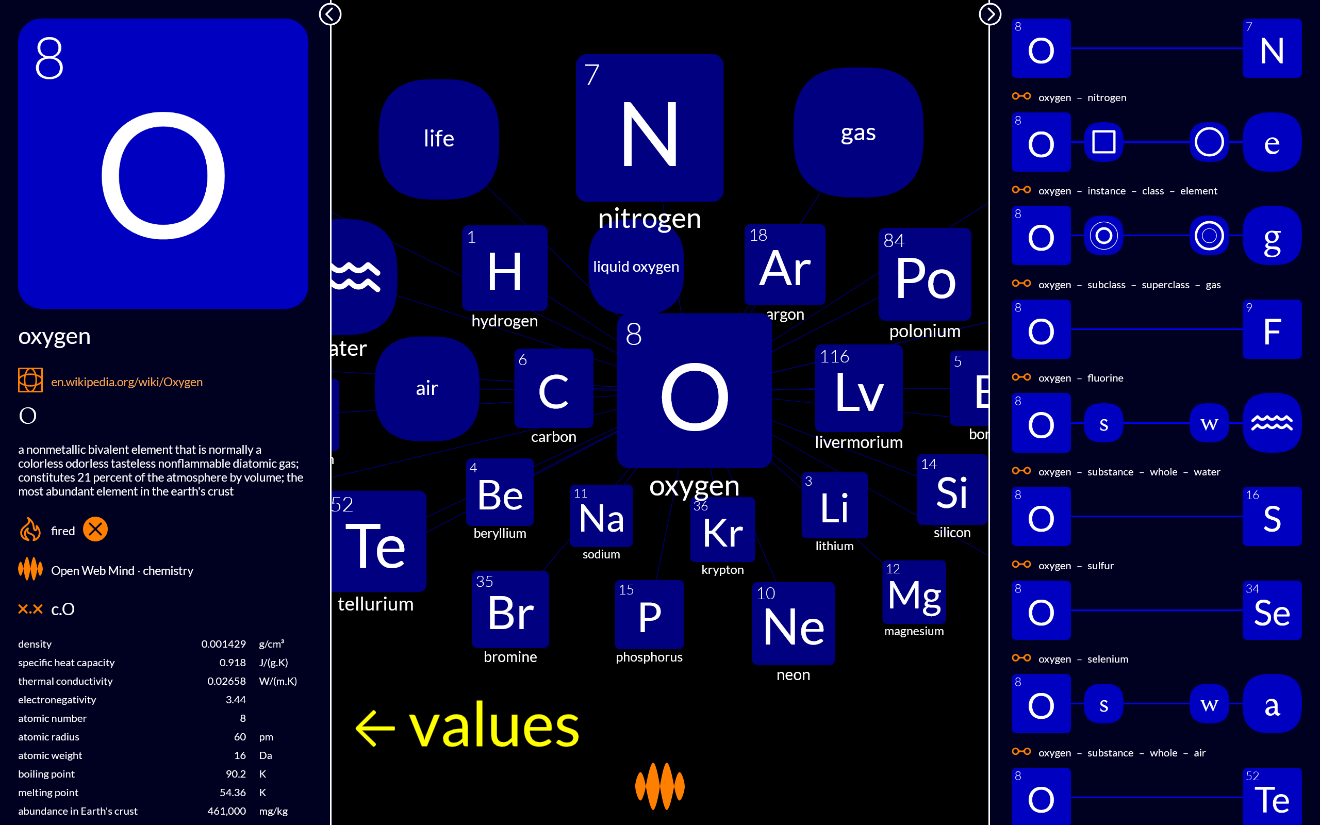
...its density, its specific heat capacity, its thermal conductivity.
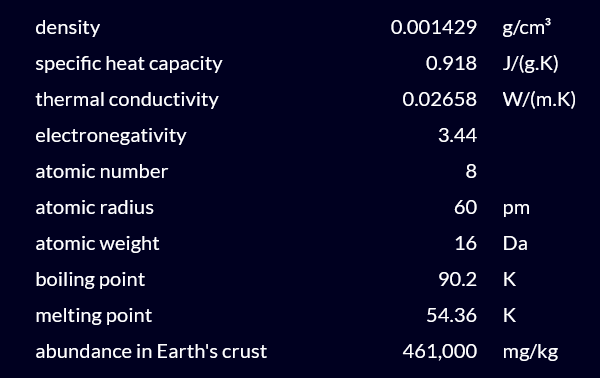
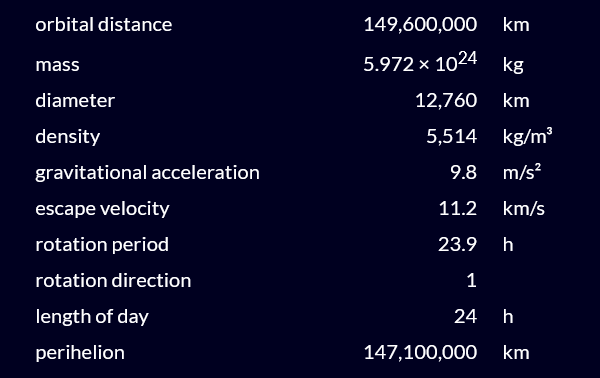
Here are a few values for the Earth...
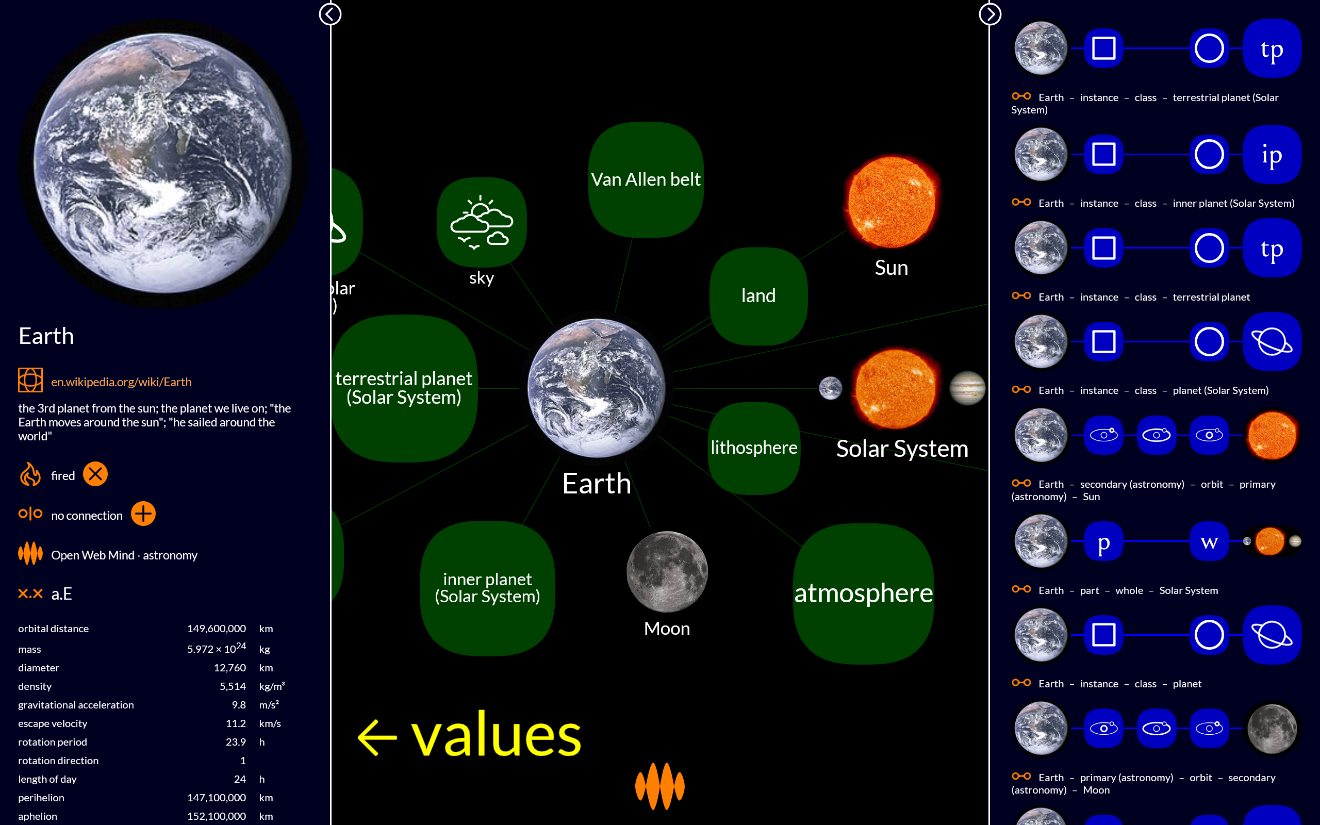
...its orbital distance, its mass, its diameter.
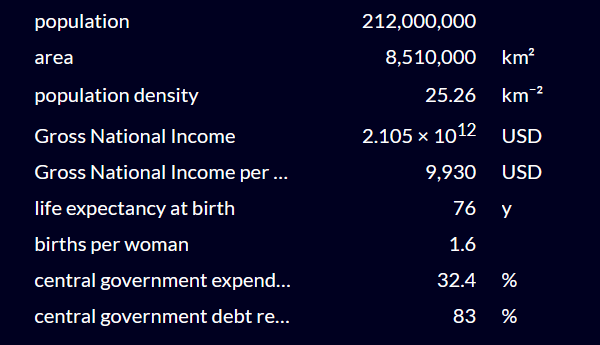
And here are a few values for the node representing Brazil...
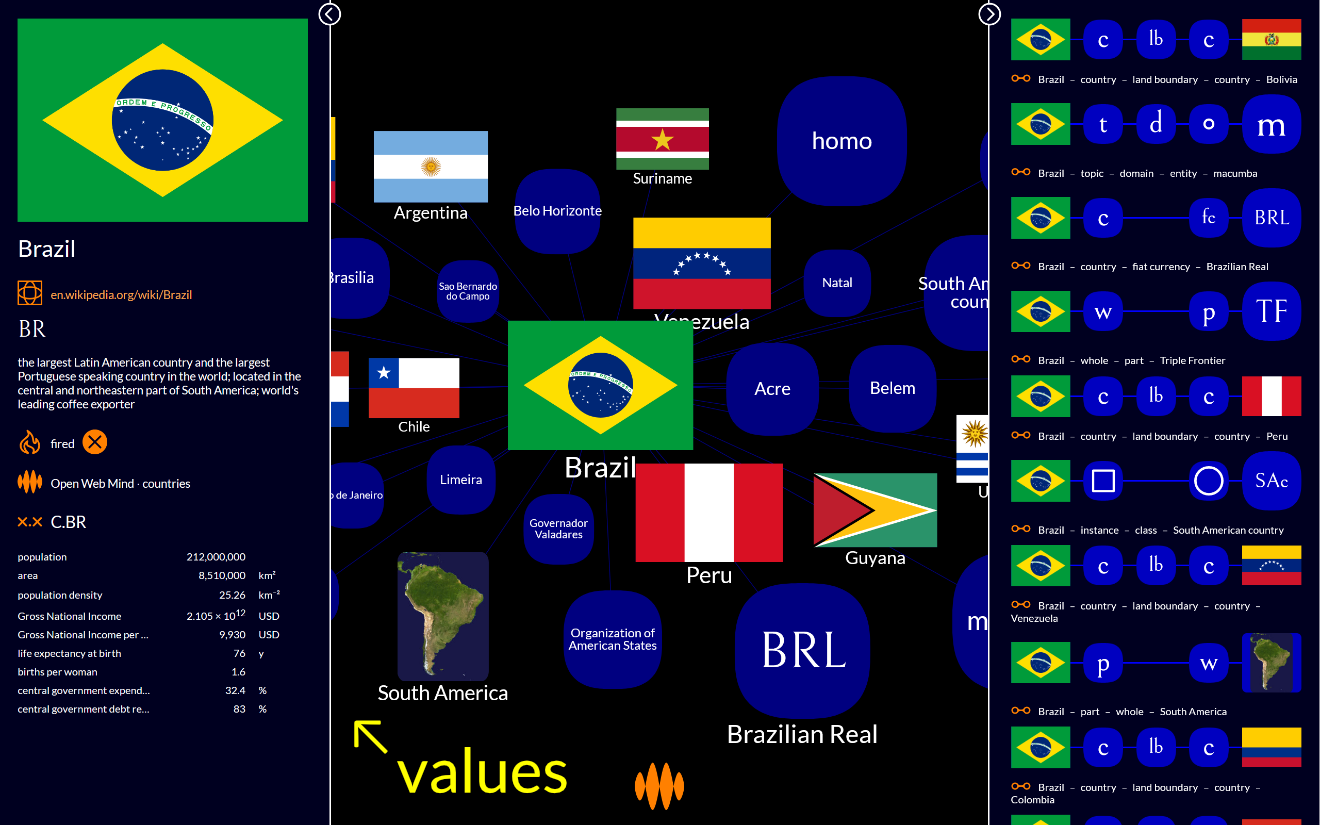
...its population, its surface area, its gross national income.
Anatomy of a value
Let’s take a closer look at one of those values.

The density of oxygen has three components: a property, a number and a unit.
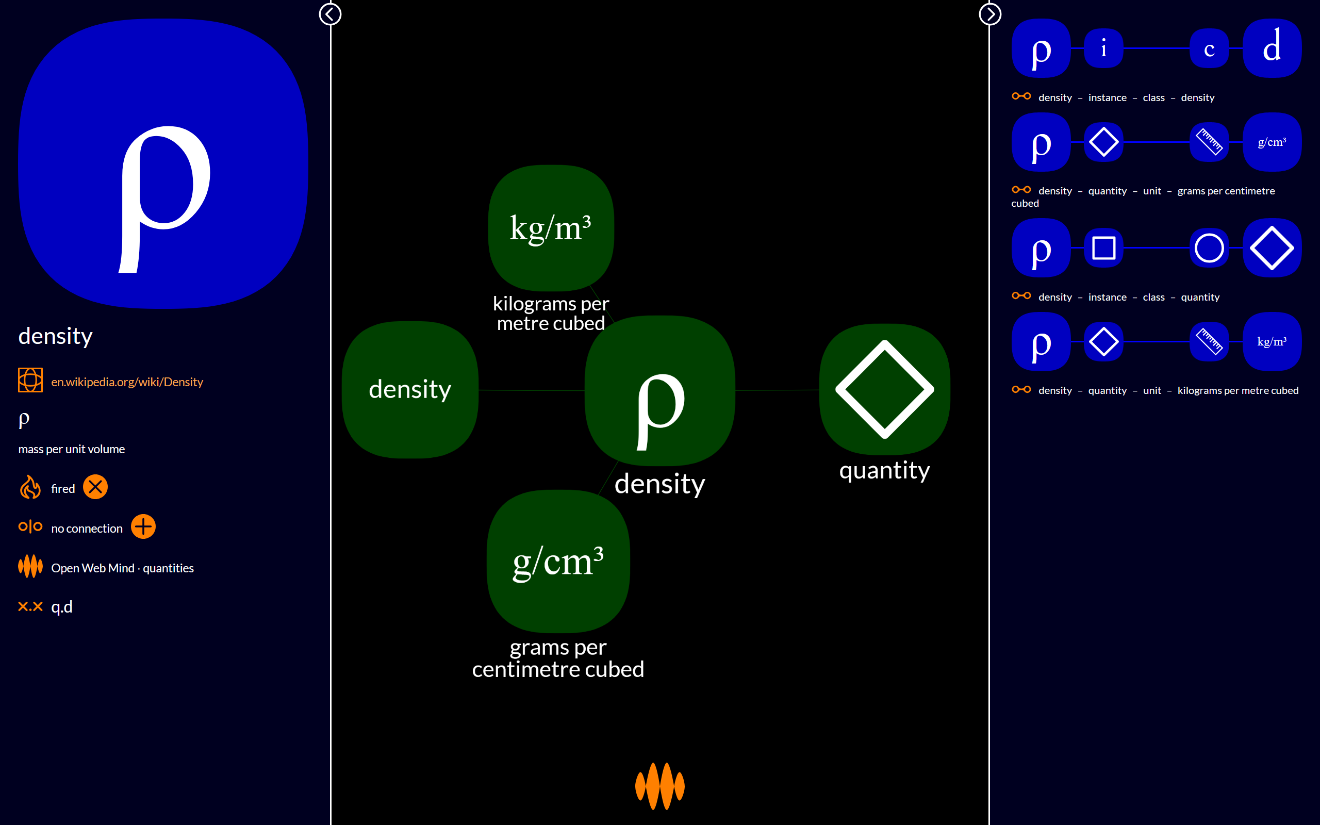
The property is density:

Like almost everything else in Open Web Mind, density is a node.
The number is 0.001429:

That’s just a cold, hard number.
And the unit is grams per centimetre cubed:

Again, like almost everything else in Open Web Mind, grams per centimetre cubed is a node.
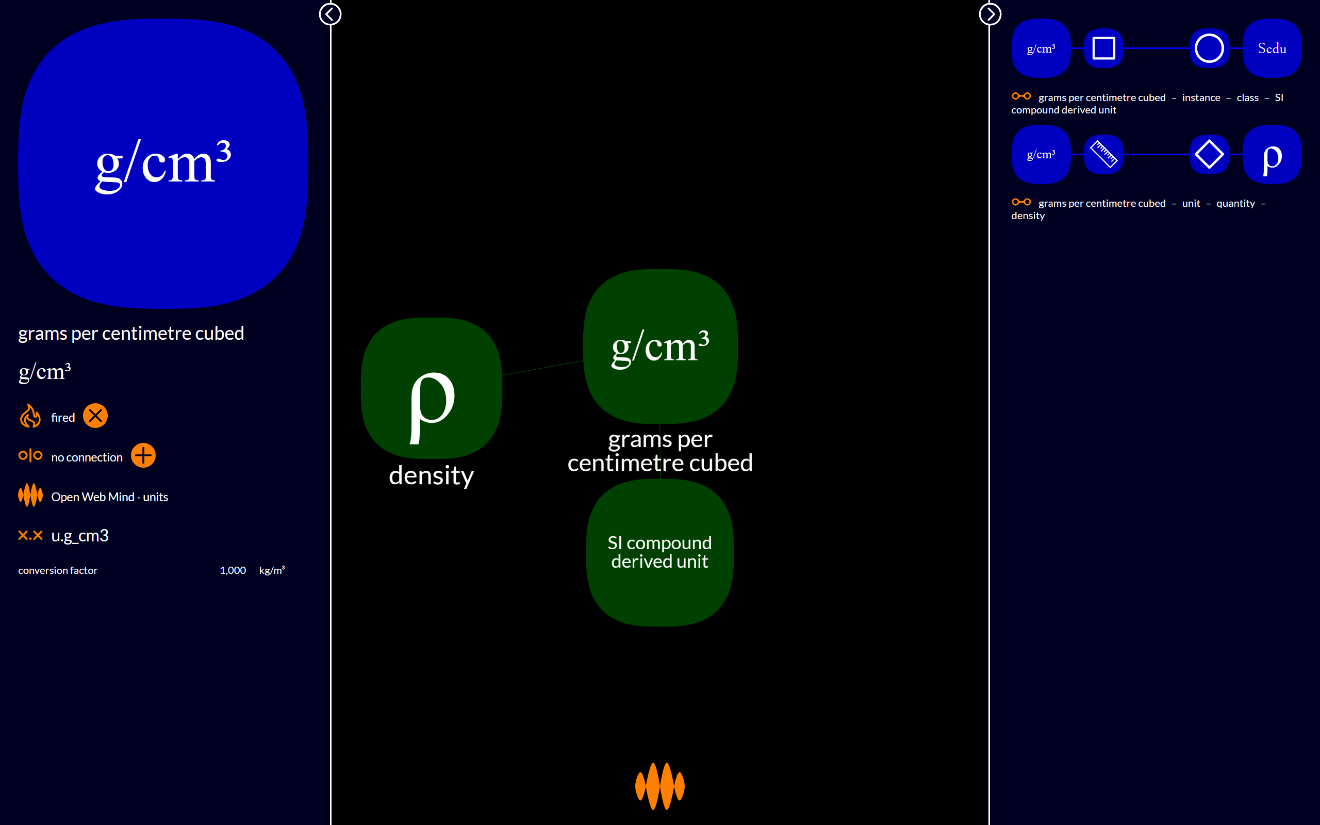
So the value tells us that the density of oxygen is 0.001429 g/cm3.
Simple.
Dimensionlessness
There are a couple of wrinkles.
Every value has a property and a number, but not all values have a unit.
Take a look at the value for the Earth’s eccentricity:

It tells us that the eccentricity of the Earth’s orbit is 0.01671.
There’s no unit, because eccentricity is dimensionless.
Don’t be too certain
The other wrinkle is uncertainty.
Take a look at the value for the Earth’s mass:

It tells us that the mass of the Earth is 5.972 × 1024 kg.
But if you hover over the value you can see that there’s more to it:

The mass of the Earth is (5.97217 +- 0.00028) × 1024 kg.
You can see that this is a more precise value.
You can also see that it has an uncertainty. The number after the +- indicates the likely error in our measurement of the mass of the Earth.
And that’s it.
Every value has a property, a number and, if it’s not dimensionless, a unit.
Some values also have an uncertainty.
That’s it.
Scattered
And... so what?
Nodes can have values. What’s the big deal?
Well, the big deal is what you can do with those values.
In future articles, I’ll be digging into what it means to have a knowledge hypergraph that can capture every cold, hard number for every node.
Here’s a sneak peek.
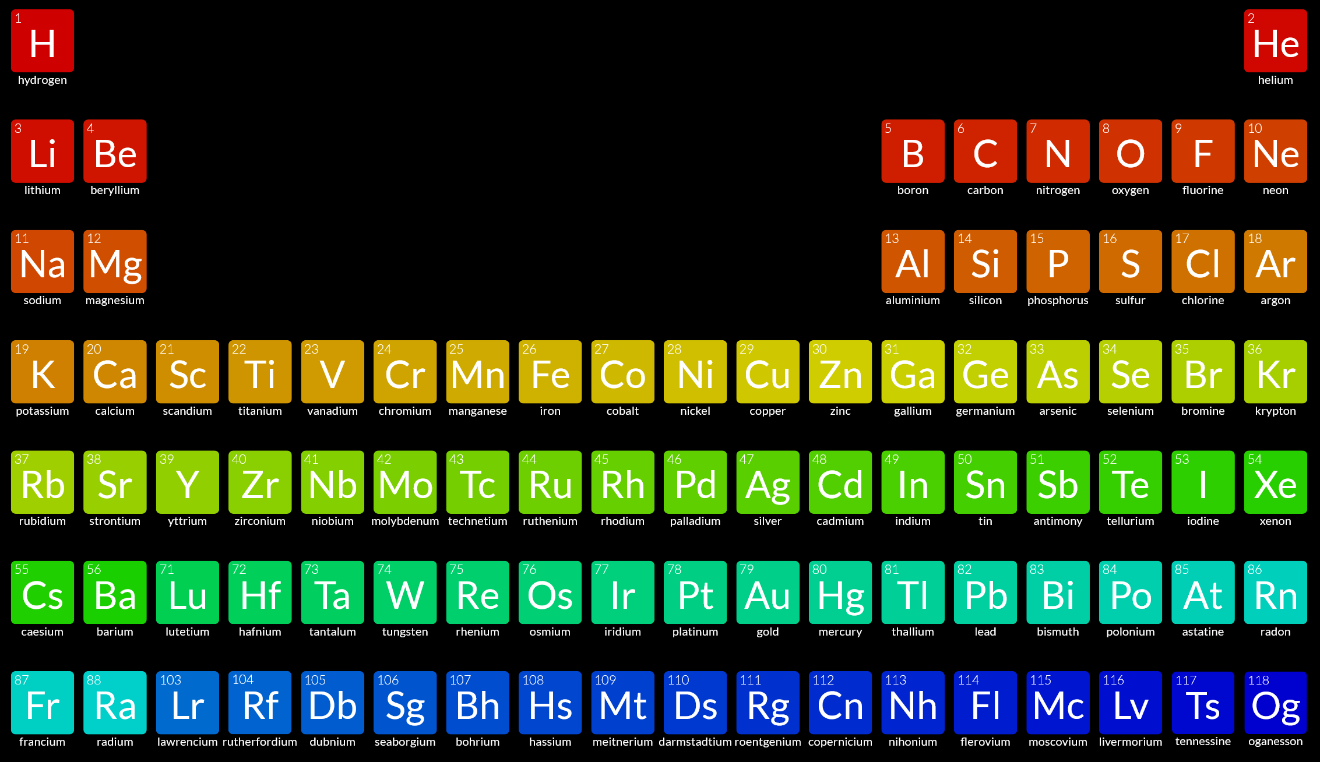
If you have values for all the chemical elements, you can visualize them in meaningful ways...
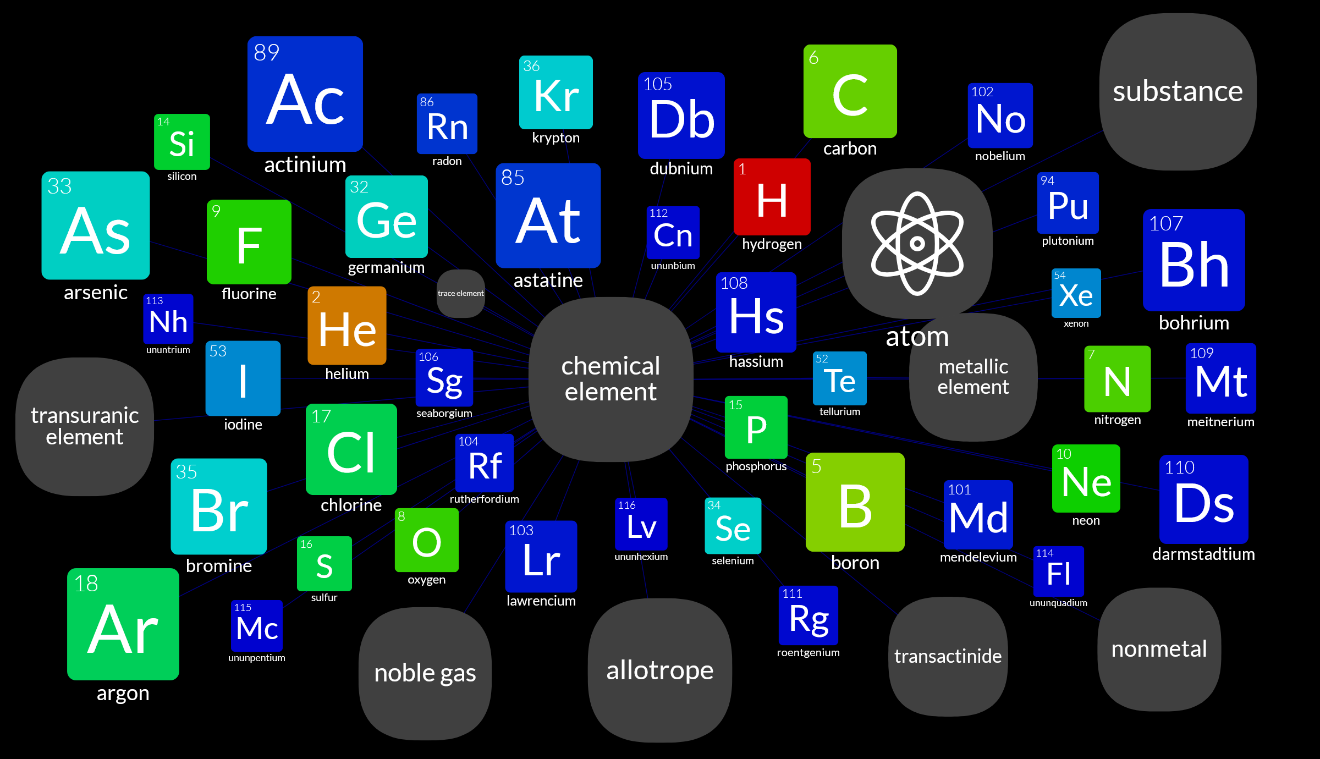
...in a periodic table...
...or in a scatter plot...
...or in innumerable other ways.
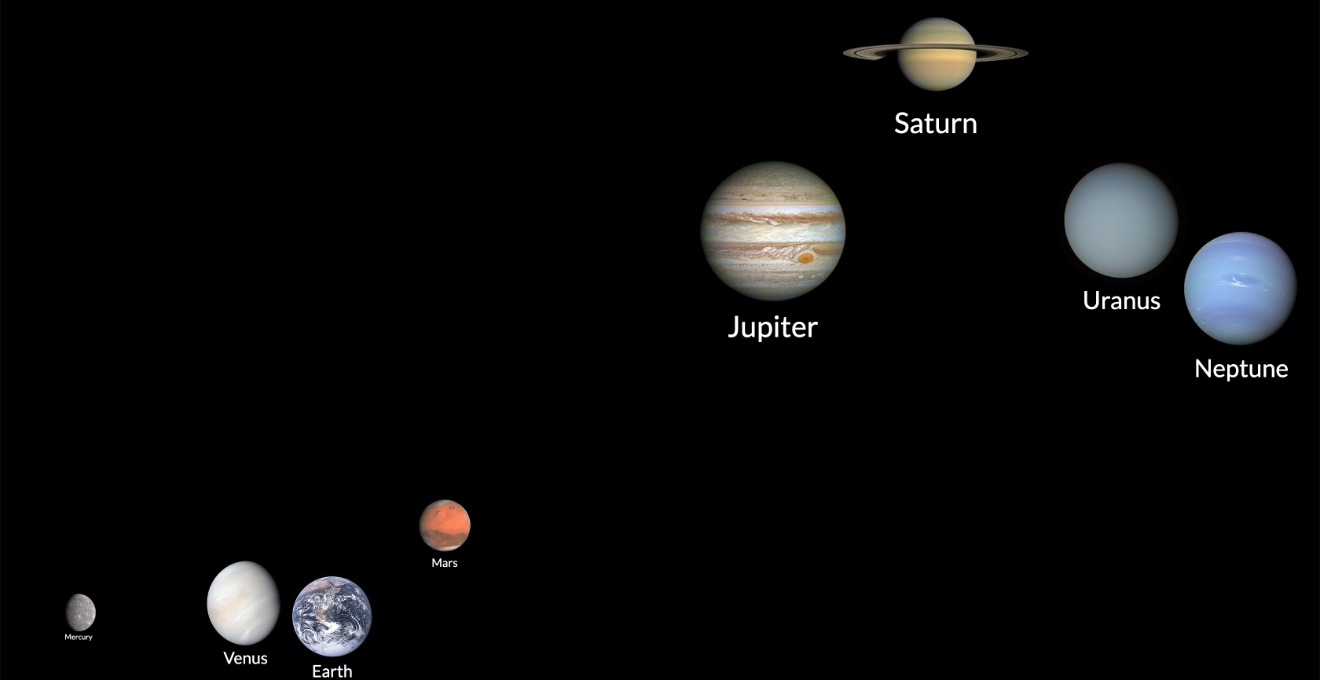
If you have values for all the planets, you can visualize the Solar System, and each of the planets’ places in it:
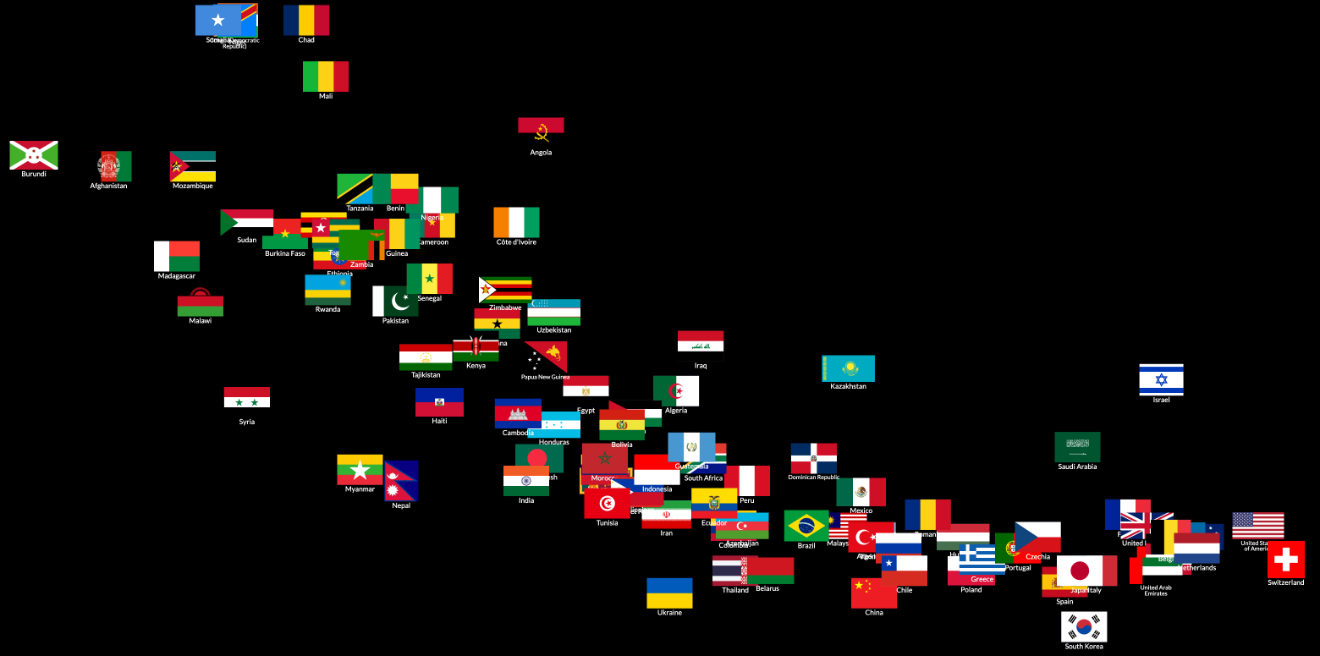
And if you have values for all the countries, you can visualize the world, and each of the countries’ places in it:
If you’re beginning to see what’s possible when you throw cold, hard numbers into the knowledge hypergraph, make sure you’re subscribed to my newsletter: there’s much more to come on the value of values.
—
Credits
- wordings from WordNet created by Princeton University licensed under WordNet 3.0 license
- wordings and values from List of chemical elements – Wikipedia created by Wikipedia licensed under CC BY-SA 4.0 according to Wikipedia license notice
- values from World Development Indicators | The World Bank created by The World Bank licensed under CC BY 4.0 according to World Bank license notice
- File:FullMoon2010.jpg – Wikimedia Commons created by Gregory H. Revera licensed under CC BY-SA 3.0


