


Every node in Open Web Mind has an ID.
Most of the time, you don’t need to think about these IDs.
But it’s important that every node have one, so that there’s a unique way to refer to it.
I refer to this as an apple:
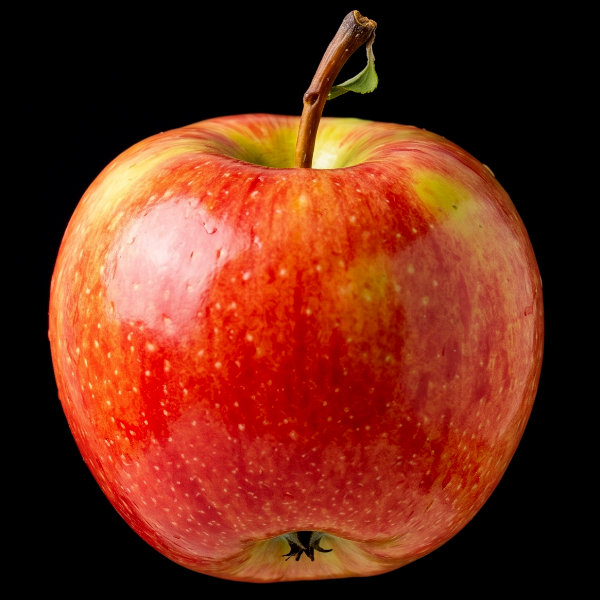
You may refer to it as a pomme, or manzana, or... well, I’m not going to try to pronounce it in any other language... but in Open Web Mind, no matter what language we speak, we can all refer to it by its ID:
e.zKO
OK, let me break that down.
Node in mind
In Open Web Mind, a node ID has two parts, separated by a dot.
xxx.xxx
There are somewhere between 1 and 10 characters before the dot. These identify the mind the node is in.
xxx.xxx
And there are somewhere between 1 and 10 characters after the dot. These identify the node within the mind.
xxx.xxx
Those characters can be any of the digits 0 to 9, any of the letters A to Z, upper or lower case, a hyphen or an underscore.
0 1 2 3 4 5 6 7 8 9
A B C D E F G H I J K L M N O P Q R S T U V W X Y Z
a b c d e f g h i j k l m n o p q r s t u v w × y z
- _
ID e.g.’s
Here’s an example.
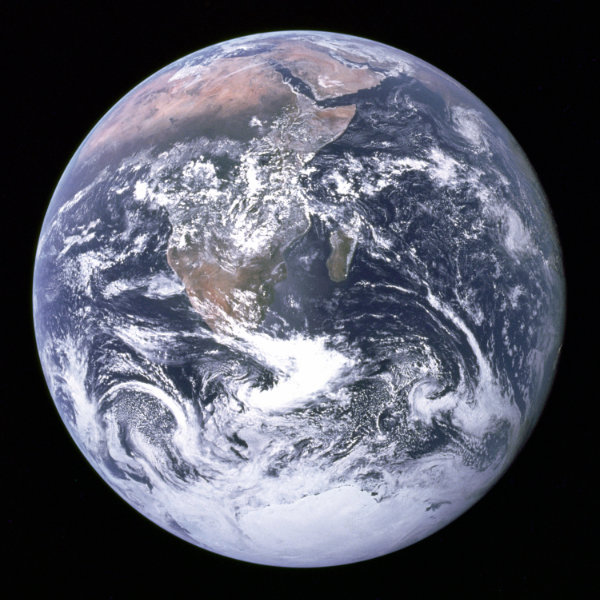
The ID for the Earth is:
a.E
a identifies the mind: this node is in the astronomy mind.
E identifies the node within the mind: this is the node for the Earth.
a.E is a short ID, as befits as important an entity as the Earth. The Open Web Mind core minds, such as the astronomy mind, have one-character IDs, such as a. Within these minds, the most important concepts are represented by shortest IDs, such as E.
Here are some more examples:
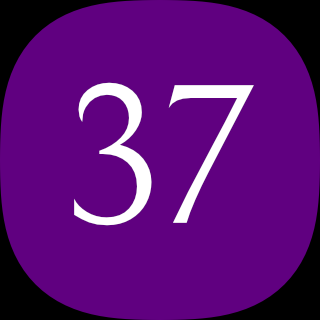
- the ID for the number 37 is n.37
- the ID for the organization NASA is o.NASA
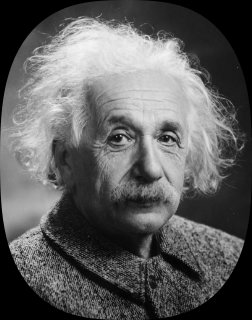
- and the ID for the person Albert Einstein is p.Einstein

Rapid fire
As I say, most of the time, you don’t need to think about these IDs, but you’ll have noticed that I’ve been using IDs to fire nodes.
You can use language to fire nodes, but language is ambiguous.
The English word gold, for example, has several subtly different meanings:
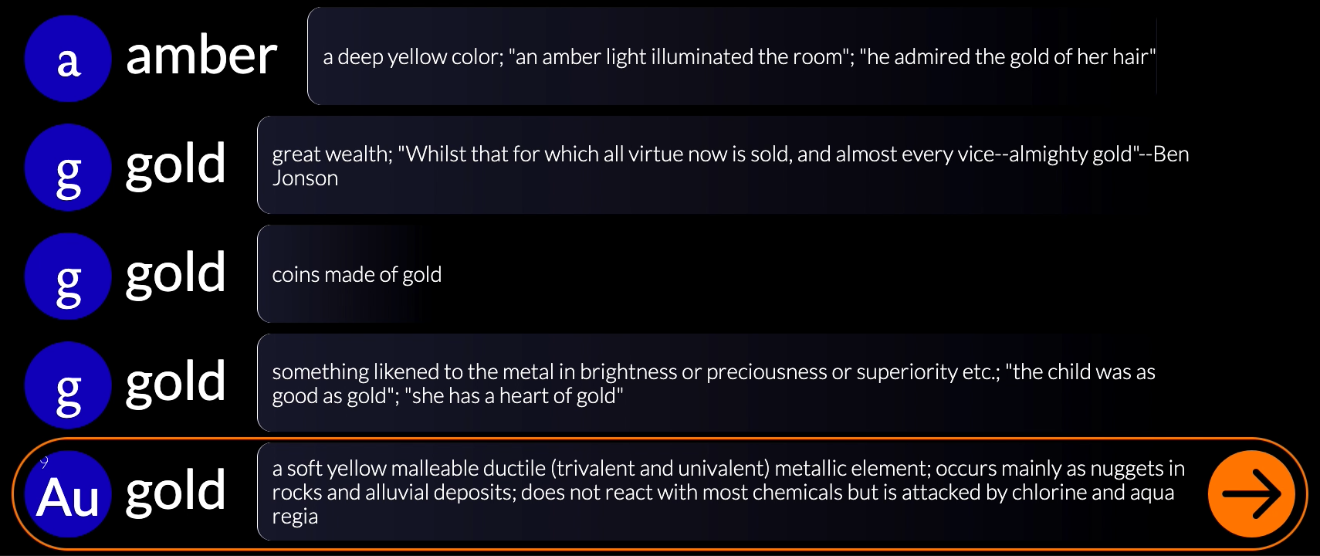
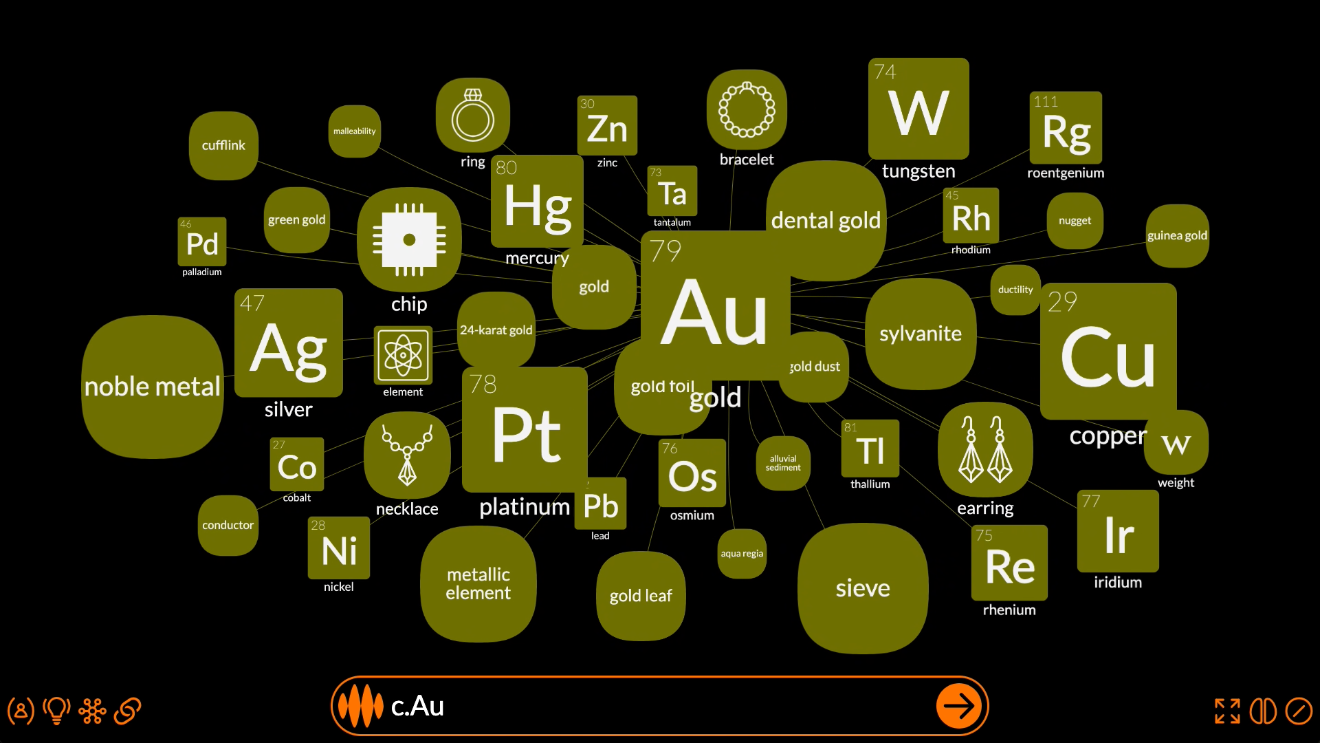
If it’s the chemical element gold I want to fire, and I happen to know that the ID for any chemical element is c for the chemistry mind dot the symbol for that chemical element, then I can simply type c.Au and avoid any ambiguity.
Independent minds
So that’s IDs in Open Web Mind.
But why?
Well, that’s quite a question.
First, why are there two parts to the ID, one for the mind and one for the node within the mind?
xxx.xxx
Well, this mind dot node format allows every mind to assign IDs in its own way.
Some minds assign IDs randomly. The entities mind, for example, assigns random three-character IDs to entities:
- the ID for umbrella is e.gcU
- the ID for sandbar is e.UKl
- and the ID for eyelid is e.PjI


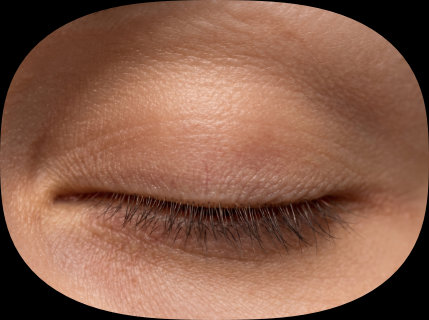
Other minds assign IDs manually. The fundamentals mind, for example, assigns carefully-chosen one-character IDs to the most fundamental concepts:
- the ID for a class is f.c
- the ID for a person is f.p
- and the ID for equivalence is f.E

Still other minds assign IDs systematically. In the languages mind, the ID for a language is the ISO 639 code for that language:
- the ID for English is L.en
- the ID for Chinese is L.zh
- and the ID for Iroquoian languages is L.iro
In your mind, you can assign IDs your way.
URL encode
Next, why these 64 characters?
0 1 2 3 4 5 6 7 8 9
A B C D E F G H I J K L M N O P Q R S T U V W X Y Z
a b c d e f g h i j k l m n o p q r s t u v w × y z
- _
Well, sometimes node IDs need to appear in URLs, and these characters, along with the dot, can appear in URLs without encoding.
In fact, these are the only characters that can appear in URLs without encoding... other than the tilde, which, as we’ll see, has a special purpose in separating IDs in Open Web Mind.
A trillion trillion trillion IDs
Finally, why 64 characters?
Well, this is pretty technical, but Open Web Mind sometimes needs to generate random-looking IDs using a Linear Congruential Generator meeting the requirements of the Hull-Dobell Theorem. (I did warn you it’s technical.) These generate numbers, which can easily be converted from binary to IDs where each character is chosen from that set of 64 characters, since 64 is a power of 2.
The point is, with up to 10 characters before the dot and up to 10 characters after the dot, there are over 6420 possible Open Web Mind IDs, which is more than a trillion trillion trillion.
I think that should be enough.


